
Welcome to WordPress. This is your first post. Edit or delete it, then start writing!
Edward Taylor

Already well educated upon his arrival at Boston in 1668, he studied for the ministry at Harvard, graduating in two years, then accepting a call to go to the western frontier to become minister and physician in Westfield, on the eve of King Philips War. His leadership kept the people from fleeing in the aftermath of the Deerfield Massacre in 1704.
Besides succeeding in establishing a vibrant settlement in the wilderness during the remaining 58 years of his life, he left a body of written matter that would remain hidden for 200 years. One of his grandsons was Ezra Stiles (1727-95), 7th president of Yale College and a founder of Brown University.
Poetry by Edward Taylor
With its dual roots in 17th century diction and dogma, I expected Taylor’s poetry to be overrun with stale diction and errant dogma. My biases were overcome as soon as I read these lines, found in The Preface to his long serial poem, God’s Determination touching his Elect:
Who made the Sea’s its selvedge, and it locks
Like a Quilt Ball within a Silver Box?
Who Spread its Canopy? Or Curtains spun?
Who in this Bowling Alley bowled the Sun?
Those few lines display enough of a nimble imagination to make Edward Taylor worth reading, even long since the world, as he contemplated it, has sunk deep beneath the surface of today’s artificially-informed virtual reality.
Edward Taylor resources online
William Cullen Bryant
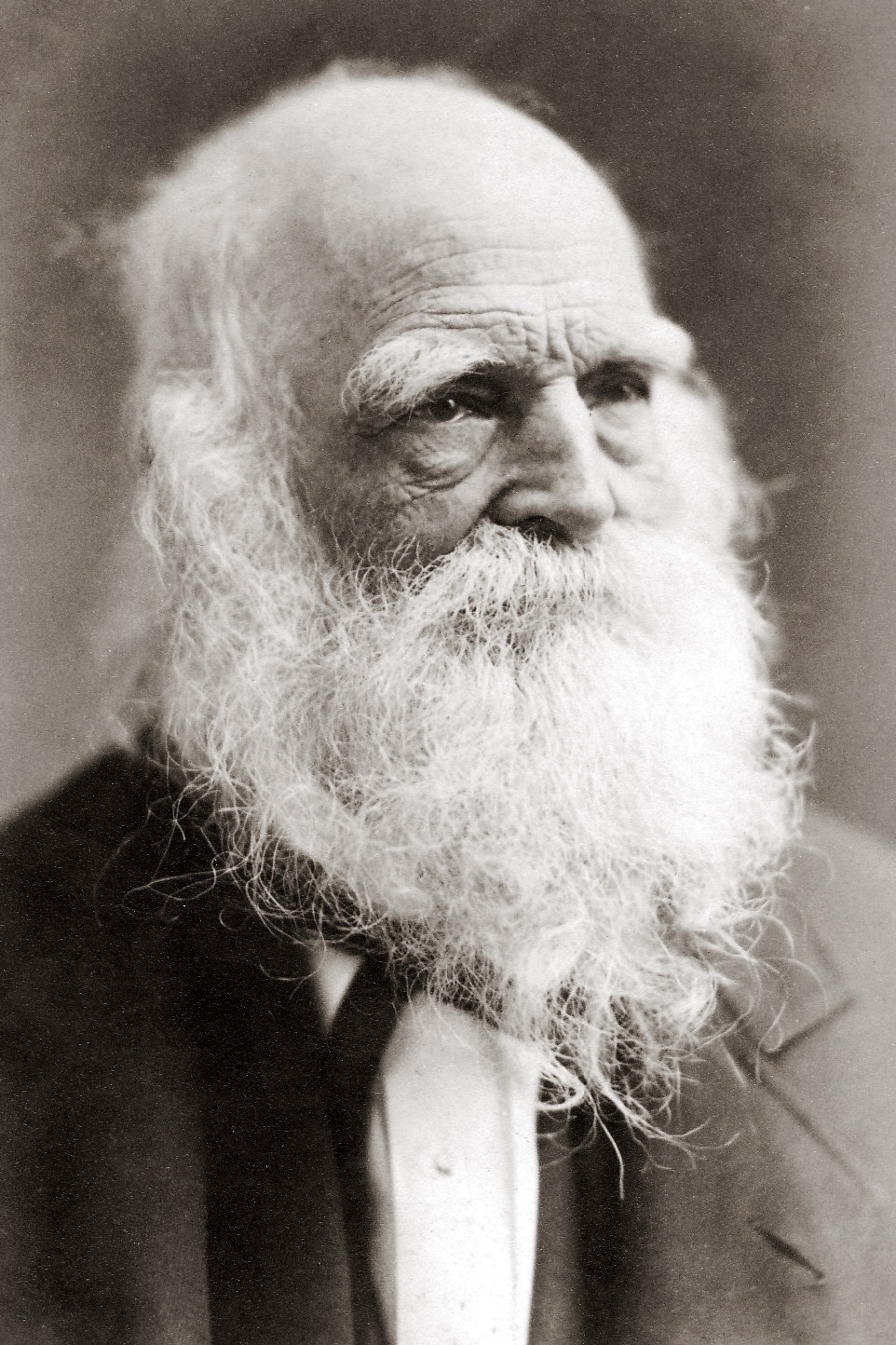 William Cullen Bryant (1794-1878) was born in Cummington; his father was a physician and his mother a Mayflower descendant. In addition to his importance as a poet, Bryant also played an important role in the development of American journalism, as editor, publisher, and part-owner of the newspaper founded by Alexander Hamilton that now is the New York Post.
Bryant wrote his most anthologized poem, Thanatopsis, in his teens; in 1808, he published The Embargo, a polemic critical of President Jefferson’s foreign policy. With Monument Mountain, Bryant spreads global renown over one of the Berkshires best loved places and familiar profiles. Less well-known is one that both honors the dispossessed Mohican nation and predicts the harm to the environment of that dispossession.
Poetry by William Cullen Bryant
Here are the concluding stanzas of the thirteen that comprise An Indian at the Burying Place of His Fathers:
Before these fields were shorn and tilled,
Full to the brim our rivers flowed;
The melody of waters filled
The fresh and boundless wood;
And torrents dashed and rivulets played,
And fountains spouted in the shade.
Those graceful sounds are heard no more,
The springs are silent in the sun,
The rivers, by the blackened shore,
With lessening current run;
The realm our tribes are crushed to get
May be a barren desert yet.
Complete poem, and many more available here.
William Cullen Bryant resources online
Monument Mountain, by William Cullen Bryant
Thou who wouldst see the lovely and the wild
Mingled in harmony on Nature’s face,
Ascend our rocky mountains. Let thy foot
Fail not with weariness, for on their tops
The beauty and the majesty of earth,
Spread wide beneath, shall make thee to forget
The steep and toilsome way. There, as thou stand’st,
The haunts of men below thee, and around
The mountain summits, thy expanding heart
Shall feel a kindred with that loftier world
To which thou art translated, and partake
The enlargement of thy vision. Thou shalt look
Upon the green and rolling forest tops,
And down into the secrets of the glens,
And streams, that with their bordering thickets strive
To hide their windings. Thou shalt gaze, at once,
Here on white villages, and tilth, and herds,
And swarming roads, and there on solitudes
That only hear the torrent, and the wind,
And eagle’s shriek. There is a precipice
That seems a fragment of some mighty wall,
Built by the hand that fashioned the old world,
To separate its nations, and thrown down
When the flood drowned them. To the north, a path
Conducts you up the narrow battlement.
Steep is the western side, shaggy and wild
With mossy trees, and pinnacles of flint,
And many a hanging crag. But, to the east,
Sheer to the vale go down the bare old cliffs,
Huge pillars, that in middle heaven upbear
Their weather-beaten capitals, here dark
With the thick moss of centuries, and there
Of chalky whiteness where the thunderbolt
Has splintered them. It is a fearful thing
To stand upon the beetling verge, and see
Where storm and lightning, from that huge gray wall,
Have tumbled down vast blocks, and at the base
Dashed them in fragments, and to lay thine ear
Over the dizzy depth, and hear the sound
Of winds, that struggle with the woods below,
Come up like ocean murmurs. But the scene
Is lovely round; a beautiful river there
Wanders amid the fresh and fertile meads,
The paradise he made unto himself,
Mining the soil for ages. On each side
The fields swell upward to the hills; beyond,
Above the hills, in the blue distance, rise
The mighty columns with which earth props heaven.
is a tale about these reverend rocks,
A sad tradition of unhappy love,
And sorrows borne and ended, long ago,
When over these fair vales the savage sought
His game in the thick woods. There was a maid,
The fairest of the Indian maids, bright-eyed,
With wealth of raven tresses, a light form,
And a gay heart. About her cabin-door
The wide old woods resounded with her song
And fairy laughter all the summer day.
She loved her cousin; such a love was deemed,
By the morality of those stern tribes,
Incestuous, and she struggled hard and long
Against her love, and reasoned with her heart,
As simple Indian maiden might. In vain.
Then her eye lost its lustre, and her step
Its lightness, and the gray-haired men that passed
Her dwelling, wondered that they heard no more
The accustomed song and laugh of her, whose looks
Were like the cheerful smile of Spring, they said,
Upon the Winter of their age. She went
To weep where no eye saw, and was not found
When all the merry girls were met to dance,
And all the hunters of the tribe were out;
Nor when they gathered from the rustling husk
The shining ear; nor when, by the river’s side,
Thay pulled the grape and startled the wild shades
With sounds of mirth. The keen-eyed Indian dames
Would whisper to each other, as they saw
Her wasting form, and say _the girl will die_.
One day into the bosom of a friend,
A playmate of her young and innocent years,
She poured her griefs. “Thou know’st, and thou alone,”
She said, “for I have told thee, all my love,
And guilt, and sorrow. I am sick of life.
All night I weep in darkness, and the morn
Glares on me, as upon a thing accursed,
That has no business on the earth. I hate
The pastimes and the pleasant toils that once
I loved; the cheerful voices of my friends
Have an unnatural horror in mine ear.
In dreams my mother, from the land of souls,
Calls me and chides me. All that look on me
Do seem to know my shame; I cannot bear
Their eyes; I cannot from my heart root out
The love that wrings it so, and I must die.”
It was a summer morning, and they went
To this old precipice. About the cliffs
Lay garlands, ears of maize, and shaggy skins
Of wolf and bear, the offerings of the tribe
Here made to the Great Spirit, for they deemed,
Like worshippers of the elder time, that God
Doth walk on the high places and affect
The earth-o’erlooking mountains. She had on
The ornaments with which her father loved
To deck the beauty of his bright-eyed girl,
And bade her wear when stranger warriors came
To be his guests. Here the friends sat them down,
And sang, all day, old songs of love and death,
And decked the poor wan victim’s hair with flowers,
And prayed that safe and swift might be her way
To the calm world of sunshine, where no grief
Makes the heart heavy and the eyelids red.
Beautiful lay the region of her tribe
Below her, waters resting in the embrace
Of the wide forest, and maize-planted glades
Opening amid the leafy wilderness.
She gazed upon it long, and at the sight
Of her own village peeping through the trees,
And her own dwelling, and the cabin roof
Of him she loved with an unlawful love,
And came to die for, a warm gush of tears
Ran from her eyes. But when the sun grew low
And the hill shadows long, she threw herself
From the steep rock and perished. There was scooped
Upon the mountain’s southern slope, a grave;
And there they laid her, in the very garb
With which the maiden decked herself for death,
With the same withering wild flowers in her hair.
And o’er the mould that covered her, the tribe
Built up a simple monument, a cone
Of small loose stones. Thenceforward all who passed,
Hunter, and dame, and virgin, laid a stone
In silence on the pile. It stands there yet.
And Indians from the distant West, who come
To visit where their fathers’ bones are laid,
Yet tell the sorrowful tale, and to this day
The mountain where the hapless maiden died
Is called the Mountain of the Monument.
Nathaniel Hawthorne

Hawthorne was an unwitting pioneer of the Berkshires’ cultural tourism industry, because the benefactors of his brief sojourn later gave the estate that included the Little Red House to the Boston Symphony Orchestra.
In 1900, The New York Times ran an article under this headline: HAWTHORNE’S STAY IN LENOX. Below is a replica of the cottage where he wrote Tanglewood Tales, and The House of Seven Gables.
His chance meeting and subsequent relationship with Herman Melville, during a rain-interrupted Monument Mountain hike in August 1850, led Melville to re-draft Moby-Dick, which he then dedicated to Hawthorne the following year. That Hawthorne remains dim in the too-bright shadow of Shakespeare is only because readers fail to heed one of the best (if 4 years late) book reviews ever written, Melville’s Hawthorne and His Mosses. See also: American Heritage 1975, Hawthorne, Melville on Monument Mountain.
Although the intervening centuries are like rigor mortis to the sound of the verse, this poem of Hawthorne’s, from 1820, will speak its truth forever.
Poetry by Nathaniel Hawthorne
Oh could I raise the darken’d veil
Oh could I raise the darken’d veil,
Which hides my future life from me,
Could unborn ages slowly sail,
Before my view—and could I see
My every action painted there,
To cast one look I would not dare.
There poverty and grief might stand,
And dark Despair’s corroding hand,
Would make me seek the lonely tomb
To slumber in its endless gloom.
Then let me never cast a look,
Within Fate’s fix’d mysterious book.
Nathaniel Hawthorne resources online
Oliver Wendell Holmes
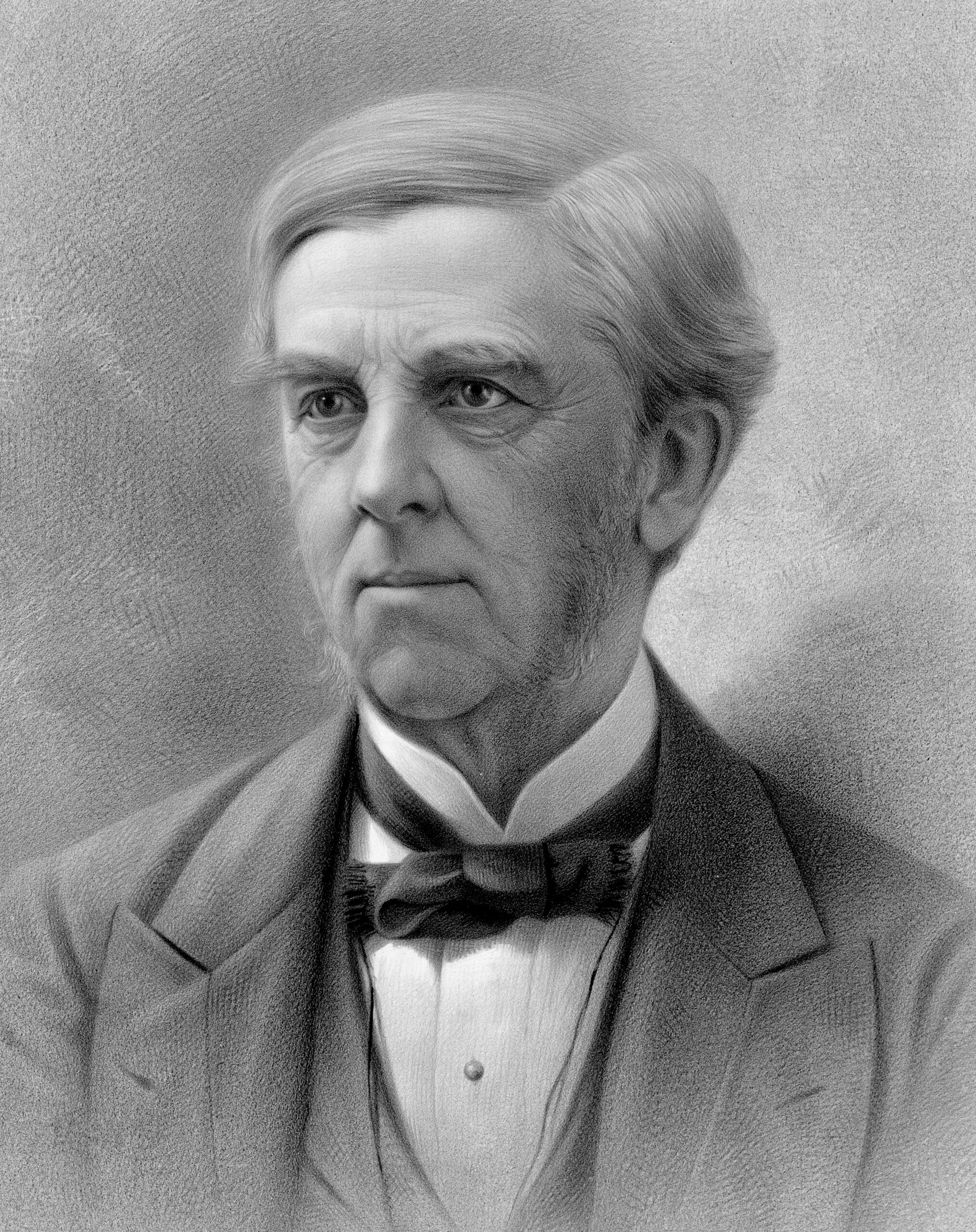 Oliver Wendell Holmes (1809-94) had as auspicious a birth as any American, next-door to Harvard Yard, in the house where the Battle of Bunker Hill was planned. His father was minister of the First Congregationalist Church and his mother was a descendant of colonial Governor Simon Bradstreet and wife, Anne, the first published American poet!
When his wife came into an inheritance in 1848, they built a summer home in Pittsfield on an estate that now is the Canoe Meadows Wildlife Sanctuary on Holmes Road. Across the street from the site of the house Holmes built is Arrowhead, Herman Melville’s former farmstead.
Holmes was in the party that hiked Monument Mountain, Aug. 5, 1850. More soon…
Poetry by Oliver Wendell Holmes
Here are the concluding 3 of the 11 stanza poem Daily Trials by a Sensitive Man:
Cockneys that kill
Thin horses of a Sunday,—men, with clams,
Hoarse as young bisons roaring for their dams
From hill to hill.
Soldiers, with guns,
Making a nuisance of the blessed air,
Child-crying bellman, children in despair,
Screeching for buns.
Storms, thunders, waves!
Howl, crash, and bellow till ye get your fill;
Ye sometimes rest; men never can be still
But in their graves.