• Skip to primary navigation
  • Skip to main content
  • Skip to primary sidebar

Luminary Poets of the Berkshires

  • Home
  • Mission
  • Contact

Mount Graylock viewed from Monument Mountain

admin

To the Housatonic at Stockbridge, by Robert Underwood Johnson

Contented river! in thy dreamy realm —
The cloudy willow and the plumy elm:
They call thee English, thinking thus to mate
Their musing streams that, oft with pause sedate,
Linger through misty meadows for a glance
At haunted tower or turret of romance.
Beware their praise who rashly would deny
To our New World its true tranquillity.
Our ” New World ” ? Nay, say rather to our Old
(Let truth and freedom make us doubly bold);

Tell them: A thousand silent years before
Their sea-born isle — at every virgin shore
Dripping like Aphrodite’s tresses — rose,
Here, ‘neath her purple veil, deep slept Repose,
To be awakened but by wail of war.
About thy cradle under yonder hill,
Before thou knewest bridge, or dam, or mill,
Soft winds of starlight whispered heavenly lore,
Which, like our childhood’s, all the workday toil
Cannot efface, nor long its beauty soil.
Thou hast grown human laboring with men
At wheel and spindle; sorrow thou dost ken;
Yet dost thou still the unshaken stars behold,
Calm to their calm returning, as of old.
Thus, like a gentle nature that grows strong
In meditation for the strife with wrong,
Thou show’st the peace that only tumult can;
Surely, serener river never ran.

Thou beautiful! From every dreamy hill
What eye but wanders with thee at thy will,
Imagining thy silver course unseen
Convoyed by two attendant streams of green
In bending lines, — like half-expected swerves
Of swaying music, or those perfect curves
We call the robin; making harmony
With many a new-found treasure of the eye:
With meadows, marging smoothly rounded hills
Where Nature teemingly the myth fulfils
Of many-breasted Plenty; with the blue,
That to the zenith fades through triple hue,
Pledge of the constant day; with clouds of white,
That haunt horizons with their blooms of light.
And when the east with rosy eve is glowing
Seem like full cheeks of zephyrs gently blowing.

Contented river! and yet over-shy
To mask thy beauty from the eager eye;
Hast thou a thought to hide from field and town?
In some deep current of the sunlit brown
Art thou disquieted — still uncontent
With praise from thy Homeric bard, who lent
The world the placidness thou gavest him?
Thee Bryant loved when life was at its brim;
And when the wine was falling, in thy wood
Of sturdy willows like a Druid stood.
Oh, for his touch on this o’er-throbbing time,
His hand upon the hectic brow of Rhyme,
Cooling its fevered passion to a pace
To lead, to stir, to reinspire the race!

Ah! there ‘s a restive ripple, and the swift
Red leaves — September’s firstlings — faster drift;
Betwixt twin aisles of prayer they seem to pass
(One green, one greenly mirrored in thy glass).
Wouldst thou away, dear stream? Come, whisper near!
I also of much resting have a fear:
Let me to-morrow thy companion be
By fall and shallow to the adventurous sea!
Leave a Comment

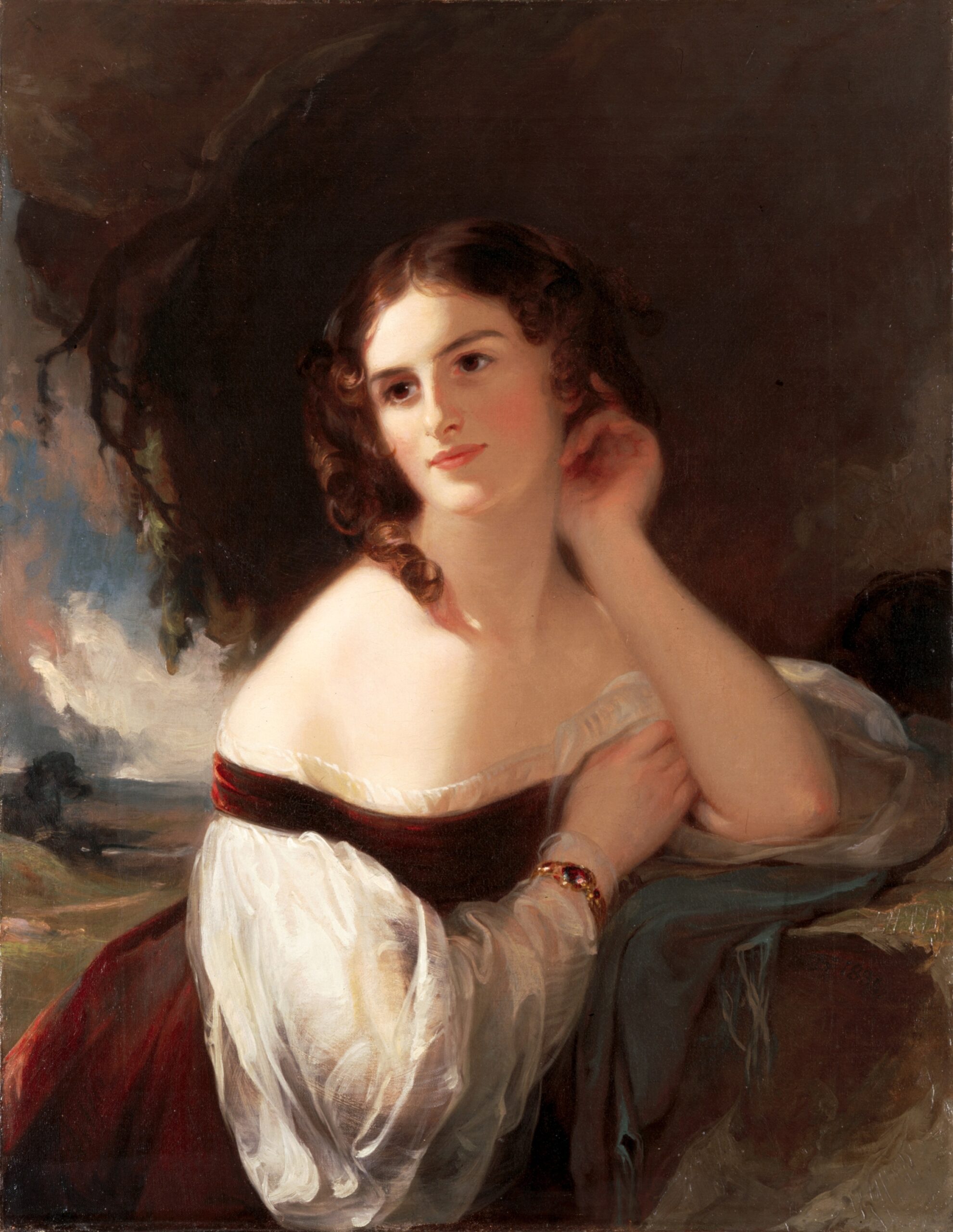
Fanny Kemble

Fanny KembleFanny Kemble (1809-93) was born into the leading theatrical family in London, educated in Paris, and wound up performing in America to raise money to rescue her father from bankruptcy. She was befriended in New York by Catharine Maria Sedgwick, who invited her to the Berkshires, which became the foundation of the cultural tourism industry in the Berkshires.

Her diary about her residence during 1838-39 on her husband’s plantation in Georgia, written in the form of letters to Mrs. Kate Sedgwick, although not published until 1863, is said to have turned the tide of English sentiment against officially supporting the Confederacy. Although great friends with both Melville and Hawthorne, Fanny Kemble was not in the party that hiked Monument Mountain, Aug. 5, 1850. More soon…

Poetry by Fanny Kemble

Faith

Better trust all, and be deceived,
And weep that trust, and that deceiving;
Than doubt one heart, that, if believed,
Had blessed one’s life with true believing.

Oh, in this mocking world, too fast
The doubting fiend o’ertakes our youth!
Better be cheated to the last,
Than lose the blessèd hope of truth.

Fanny Kemble resources online

  • Poetry Foundation
  • Wikipedia
  • Library of America – 19th Century vol. 1
  • Project Gutenberg

Leave a Comment

Herman Melville

Herman MelvilleHerman Melville (1819-91) was so moved by his chance encounter with Nathaniel Hawthorne, during the legendary Monument Mountain hike of 1850, that he re-wrote Moby-Dick in a matter of months. For a most thorough account of the legendary Monument Mountain hike, Aug. 5, 1850, please see this page at American Heritage.

Since that novel remains required reading among the world’s best-read people two centuries later, it’s no wonder the Berkshires remains celebrated for her cultural roots. Less well-known about Melville is his devotion to poetry, which is demonstrated by his 18,000 line poem Clarel, published in 1878, some twenty years after his pilgrimage to the Holy Land.

Herman Melville resources online

  • Poetry Foundation
  • Wikipedia
  • Library of America
  • Project Gutenberg

Poetry by Herman Melville

Art

In placid hours well-pleased we dream
Of many a brave unbodied scheme.
But form to lend, pulsed life create,
What unlike things must meet and mate:
A flame to melt—a wind to freeze;
Sad patience—joyous energies;
Humility—yet pride and scorn;
Instinct and study; love and hate;
Audacity—reverence. These must mate,
And fuse with Jacob’s mystic heart,
To wrestle with the angel—Art.

Leave a Comment

The Embargo, by William Cullen Bryant

(Written when Bryant was 13 years old)

“When private faith and public trust are sold,
And traitors barter liberty for gold;
When fell corruption, dark, and deep, like fate,
Saps the foundation of a sinking state;
Then warmer numbers glow through satire’s page,
And all her smiles are darken’d into rage;
Then keener indignation fires her eye,
Then flash her lightnings, and her thunders fly!”

ESSAY ON SATIRE

______________

Look where we will, and in whatever land,
Europe’s rich soil, or Afric’s barren sand,
Where the wild savage hunts his wilder prey,
Or art and science pour their brightest day,
The monster Vice appears before our eyes,
In naked impudence, or gay disguise.

But quit the meaner game indignant muse,
And to thy country turn thy nobler views;
Ill-fated clime! condemn’d to feel th’ extremes,
Of a weak ruler’s philosophic dreams;
Driven headlong on, to ruin’s fateful brink,
When will thy country feel, when will she think!

Satiric muse, shall injured Commerce weep
Her ravish’d rights, and will thy thunders sleep;
Dart thy keen glances, knit thy threat’ning brows,
Call fire from heaven to blast thy country’s foes.
Oh let a youth thine inspiration learn–
Oh give him “words that breathe and thoughts that burn!”

Curse of our nation, source of countless woes,
From whose dark womb unreckon’d misery flows,
Th’ Embargo rages, like a sweeping wind,
Fear lowers before, and famine stalks behind.
What words, O Muse! can paint the mournful scene,
The saddening street, the desolated green;
How hungry labourers leave their toil and sigh,
And sorrow droops in each desponding eye!

See the bold Sailor from the Ocean torn,
His element, sink friendless and forlorn!
His suffering spouse the tear of anguish shed,
His starving children cry in vain for bread!
On the rough billows of misfortune tost,
Resources fail, and all his hopes are lost;
To foreign climes, for that relief he flies,
His native land ungratefully denies.

In vain Mechanics ply their curious art,
And bootless mourn the interdicted mart;
While our sage Ruler’s diplomatic skill,
Subjects our councils to his sovereign will;
His grand “restrictive energies” employs,
And wisely regulating trade–destroys.

The Farmer, since supporting trade is fled,
Leaves the rude joke, and cheerless hangs his head;
Misfortunes fall, an unremitting shower,
Debts follow debts, on taxes, taxes pour,–
See in his stores his hoarded produce rot,
Or Sheriff sales his profits bring to naught;
Disheartening cares in thronging myriads flow,
Till down he sinks to poverty and woe!
Ye, who rely on Jeffersonian skill;
And say that fancy paints ideal ill;
Go, on the wings of observation fly,
Cast o’er the land a scrutinizing eye;
States, counties, towns, remark with keen review,
Let facts convince and own the picture true!

Oh, ye bright pair! the blessing of mankind,
Whom time has sanction’d, and whom fate has join’d,
COMMERCE, that bears the trident of the main,
And AGRICULTURE, empress of the plain;
Who hand in hand, and heav’n-directed, go
Diffusing gladness through the world below;
Whoe’er the wretch, would hurl the flaming brand
Of dire disunion, palsied be his hand!
Like “Cromwell damn’d to everlasting fame,”
Let unborn ages execrate his name!

How foul a blot Columbia’s glory stains!
How dark the scene! infatuation reigns!
For French intrigue which wheedles to devour,
Threatens to fix us in Napoleon’s power;
Anon within th’ insatiate vortex whirl’d,
Whose wide periphery involves the world.

Oh, heaven defend, as future seasons roll,
These western climes from Bonaparte’s control;
Preserve our freedom, and our rights secure,
While truth subsists, and virtue shall endure!
Lo Austria crouches to the tyrant’s stroke,
And bends proud Rome beneath his galling yoke;
Infuriate, reeking with the spoils of war,
O’er prostrate kingdoms rolls his blood-stain’d car;
Embattled hosts in vain his fury meet,
Sceptres and crowns he treads beneath his feet.

Aspiring Belgia, once the patriot’s pride,
When barbarous Alva, her brave sons defied;
The nurse of arts, th’ advent’rous merchant’s boast,
Whose wide-spread commerce whiten’d every coast.
Humbled, degraded, by the vilest arts,
Beneath his iron scourge, succumbing smarts;
The crowded city, the canal’s green shore,
Fair haunts of free-born opulence, no more!

Ah, hapless land! where freedom lov’d to dwell,
Helvetia’s fall, what weeping bard shall tell!
Warn’d too by Lusitania’s fate, beware!–
Columbians wake! evade the deep laid snare!
Insensate! shall we ruin court, and fall,
Slaves to the proud autocrator of Gaul?
Our laws laid prostrate by his ruthless hand,
And independence banish’d from our land!

We who seven years erst brav’d Britannia’s power,
By Heaven supported in the gloomiest hour;
For whom our Sages plann’d, our Heroes bled,
Whom WASHINGTON, our pride, and glory led;
Till heaven propitious did our efforts crown
With freedom, commerce, plenty, and renown.

When shall this land, some courteous angel say,
Throw off a weak, and erring ruler’s sway?
Rise, injured people, vindicate your cause!
And prove your love of liberty and laws;
Oh wrest, sole refuge of a sinking land,
The sceptre from the slave’s imbecile hand!
Oh ne’er consent, obsequious, to advance,
The willing vassal of imperious France!
Correct that suffrage you misus’d before,
And lift your voice above a congress roar.

And thou, the scorn of every patriot name,
Thy country’s ruin, and her council’s shame!
Poor servile thing! derision of the brave!
Who erst from Tarleton fled to Carter’s cave;
Thou, who, when menac’d by perfidious Gaul,
Didst prostrate to her whisker’d minion fall;
And when our cash her empty bags supply’d,
Didst meanly strive the foul disgrace to hide;
Go, wretch, resign the presidential chair,
Disclose thy secret measures, foul or fair.
Go, search with curious eye, for horned frogs,
Mid the wild wastes of Louisianian bogs;
Or, where Ohio rolls his turbid stream,
Dig for huge bones, thy glory and thy theme.
Go, scan, Philosophist, thy ****** charms
And sink supinely in her sable arms;
But quit to abler hands the helm of state,
Nor image ruin on thy country’s fate!

Ah hapless State! with wayward councils curst,
Blind to thy weal, and to thy laws unjust;–
For, where their blasting “energies” extend,
Foes undermine and dire divisions rend;–
Who shall sustain thy gradual sinking form,
And guide thee safely through the gathering storm?
What guardian Angel shall conduct thee o’er
Misfortune’s ocean to a peaceful shore?–
Remove the source whence all thy troubles rose,
And shield from foreign and domestic foes!

Oh for a WASHINGTON, whose boundless mind,
Infolds his friends, his country, and mankind;
He might restore our happy state again,
And roll our Navy o’er the billowy main;
From all our shores bid lawless pirates fly,
And lift our wond’ring Eagle to the sky!

But vain are reason, eloquence, and art,
And vain the warm effusions of the heart.
E’en while I sing, see Faction urge her claim,
Mislead with falsehood, and with zeal inflame;
Lift her black banner, spread her empire wide,
And stalk triumphant with a fury’s stride.
She blows her brazen trump, and at the sound,
A motley throng, obedient, flock around;
A mist of changing hue, o’er all she flings,
And darkness perches on her dragon wings!

As Johnson deep, as Addison refin’d,
And skill’d to pour conviction o’er the mind,
Oh, might some patriot rise! the gloom dispel,
Chase error’s mist, and break her magic spell!

But vain the wish, for hark! the murmuring meed
Of hoarse applause from yonder shed proceed;
Enter, and view the thronging concourse there,
Intent, with gaping mouth, and stupid stare;
While in the midst their supple leader stands,
Harangues aloud, and flourishes his hands;
To adulation tunes his servile throat,
And sues successful for each blockhead’s vote.

“The advocate of liberty I stand,–
Oh were I made a ruler in the land!
Your interests none more cherishes than I,
In your sweet service, may I live and die!
For the dear people, how my bowels yearn!–
That such may govern be your chief concern;
Then federalism, and all its lordling train,
Shall fall disgrac’d before our equal reign;
Dismay’d, diminish’d, our fair presence shun,
As shadows shorten to the rising sun;
Spontaneous banquets shall succeed to want,
No tax shall vex you, and no sheriff haunt.”

The powerful influence of the knave’s address,
In capers droll, the foolish dupes express;
With horrid shouts th’ affrighted sky is rent,
And high in air their tatter’d hats are sent.

But should truth shine distinguishingly bright,
And lay his meanness naked to the sight;
He tries new arts to blind their willing eyes,
Feeds with new flatt’ries, hammers out new lies;
Exerts his influence, urges all his weight,
To blast the laurels of the good and great;
Till reconfirm’d, the fools uphold him still,
Their creed his dictum, and their law his will.

Now morning rises borne on golden wings,
And fresh to toil the waking post-boy springs;
Lo, trudging on his raw bon’d steed he hies,
Dispersing Suns, and Chronicles, and Spys.
Men uninform’d, in rage for something new,
Howe’er unprincipled, howe’er untrue,
Suck in with greedy throat the gilded pill,
Whose fatal sweetness pleases but to kill.
Wide, and more wide the dire contagion flies,
Till half the town is overwhelm’d with lies.
Hence that delusion, hence that furious zeal,
Which wrong-heads cherish, and which hot-heads feel.

Oh, snatch me heaven! to some sequester’d spot,
Where Jefferson, and faction, are forgot;
Where never Suns nor Chronicles molest,
Duane and Colvin unregarded rest.
Sick of the tumult, where the noisy throng,
In wild disorder, roar of right and wrong;
Where lying pamphlets round the town are sped,
And knowing politicians talk you dead!

In vain Italia boasts her genial clime,
Her Rome’s proud towers, and palaces sublime;
In vain the hardy Swiss, inur’d to toil,
Draw scant subsistence from a stubborn soil;
Both doom’d alike, to feel, in evil hour,
The giant grasp of huge despotic power!
Touch not their shores, fair freedom dwells not there,
But far remote, she breathes Columbian air;
Yet here, her temple totters to its fall,
Shook from its centre by gigantic Gaul!

Oh, let not prating History proclaim,
The foul disgrace, the scandal of our name!
Write not the deed my hand! Oh may it lie,
Plung’d deep, and mantled in obscurity!
Forbid it heaven! that while true honour reigns,
And ancient valour glows within our veins,
(Our standard justice, and our shield our God,)
We e’er should tremble at a despot’s nod!

Oh, may the laurels of unrival’d fame,
For ever flourish round your honour’d name!
Ye, who unthrall’d by prejudice, or power,
Determin’d stood in that eventful hour;
Tore the dire secret from the womb of night,
And brought your country’s infamy to light!
Go boldly on the deep-laid plot unfold,
Though much is known, yet much remains untold.
But chief to thee our gratitude belongs,
Oh Pickering! who hast scan’d thy country’s wrongs,
Whose ardent mind, and keen discerning eye,
Trac’d out the true Embargo policy;
Shew’d that our Chief, unable to control,
The alien yearnings of his dastard soul;
And curst with feelings hostile to our trade,
At beck of France, the dire restriction laid!

Hail first of Statesmen! Massachusetts’ pride!
Fam’d in her wars, and in her councils try’d;
Long to thy friends by private worth endear’d,
“In pure majestic poverty rever’d”;
At thy rebuke, (though late so monstrous grown,)
Corruption trembles on her venal throne!
Oh, may the people, with attentive eyes,
Peruse thy well-tim’d warnings and be wise!

Mournful reverse! the muse with grief would trace,
The painful scene of thy colleague’s disgrace.
Unhappy he, by glare of office lur’d,
Renounc’d the truth, and federal faith abjur’d!
With fine spun sophisms, and inflated style,
Strove to mislead, bewilder, and beguile;
O’er presidential error gently spread
The flimsy veil, perverted reason made.
Virtue abash’d beheld th’ apostate’s zeal,
And freedom trembled for the public weal;
Till Coleman rose, by honest anger led,
And at his touch the gay delusion fled;
The veil disparts, the painted bubbles burst,
The splendid fabric crumbles into dust!

Go on, ye pimps of France! intriguers fell!
Wind your dark ways, and aid the work of hell!
Go, rouse dire faction from her gloomy den,
Wake the worst passions in the breasts of men;
O’er a once free, once heaven-protected land,
Impel the tempest with infuriate hand;
Go, lure the simple, with unfaithful views,
To paths where error her wild way pursues;
But soon from heaven, shall justice wing her way,
Arrest your course, and immolate her prey!

So prays the muse;–while bursting on the sight,
Hope’s torch diffuses an enlivening light;
And scenes, prophetic of Columbia’s rise
To former glory, greet the gladden’d eyes.
Rous’d by the murmurs of the coming storm,
Lo, freedom’s genius lifts her radiant form!
Rolls her keen eye, and hovering o’er the land,
Calls in loud thunders to her slumbering band.
Far o’er the realm, electric, unconfin’d,
Flies the quick flame, and runs from mind to mind.
Wak’d from her stupid lethargy, at length
Old Massachusetts, feels returning strength;
Her sons, reflecting, break the baneful league,
With factious zeal, and popular intrigue;
No more they hug delusion’s magic chain,
Nor grasp at objects, fleeting, and inane;
But break the charm, false, flatt’ring error binds,
The pleasing mania, that enchain’d their minds.

And now as Truth with growing lustre shines,
Before her beams Democracy declines;
Vain are all arts her baffled leaders try,
And vain alike, to flatter or to lie.
From their long sleep alarm’d the people rise,
And spite of sophisms, learn to trust their eyes.

Rise then, Columbians! heed not France’s wiles,
Her bullying mandates, her seductive smiles;
Send home Napoleon’s slave, and bid him say
No arts can lure us, and no threats dismay;
Determin’d yet to war with whom we will,
Choose our allies, or dare be “neutral” still.

Ye merchants arm! the tyrant Gaul repel,
Your prowess shall the naval triumph swell;
Send the marauders shatter’d whence they came,
And Gallia’s cheek suffuse with crimson shame.
But first select, our councils to direct,
One whose true worth entitles to respect:
In whom concentrates all that men admire,
The Sage’s prudence, and the Soldier’s fire;
Who scorns ambition, and the venal tribe,
And neither offers, nor receives a bribe;
Who firmly guards his country’s every right,
And shines alike, in council, or in fight.

Then on safe seas, the merchant’s barque shall fly,
Our waving flag, shall kiss the polar sky;
On canvass wings our thunders shall be borne,
Far to the west, or tow’rd the rising morn;
Then may we dare a haughty tyrant’s rage,
And gain the blessings of an unborn age.

‘Tis done, behold, the cheerful prospects rise!
And splendid scenes the startled eye surprize;
Lo! busy Commerce courts the prosperous main,
And peace and plenty glad our shores again!
Th’ industrious swain sees nature smile around,
His fields with fruit, with flocks, his pastures crown’d.

Thus, in a fallen tree, from sprouting roots,
With sudden growth, a tender sapling shoots,
Improves from day to day, delights the eyes,
With strength, and beauty, stateliness, and size,
Puts forth robuster arms, and broader leaves,
And high in air its branching head upheaves.

Turn now our views to Europe’s ravag’d plains,
Where murderous war, with grim oppression reigns;
There long, and loud, the storm of battle roars,
With direful portent to our distant shores;
The regal robber, rages uncontrol’d,
No law restrains him, and no faith can hold;
Before his steps, lo! cowering terror flies,
And pil’d behind him, heaps of carnage rise!
With fraud, or force, he spreads his iron sway,
And blood, and rapine, mark his frightful way!

Thus some huge rock of ice, on Greenland’s shore,
When bound in frost, the surges cease to roar,
Breaks loosen’d from its base, with mighty sweep,
And thunders horrid o’er the frozen deep.

While thus, all Europe rings with his alarms,
Say, shall we rush, unthinking, to his arms?
No; let us dauntless all his fury brave,
Our fluttering flag, in freedom’s gale shall wave,
Our guardian Sachem’s errless shafts shall fly,
And terrors lighten from our eagle’s eye!

Hear then I cease, rewarded, if my song,
Shall prompt one honest mind, though guided wrong,
To pause from party, view his country’s state,
And lend his aid to stern approaching fate.

Leave a Comment

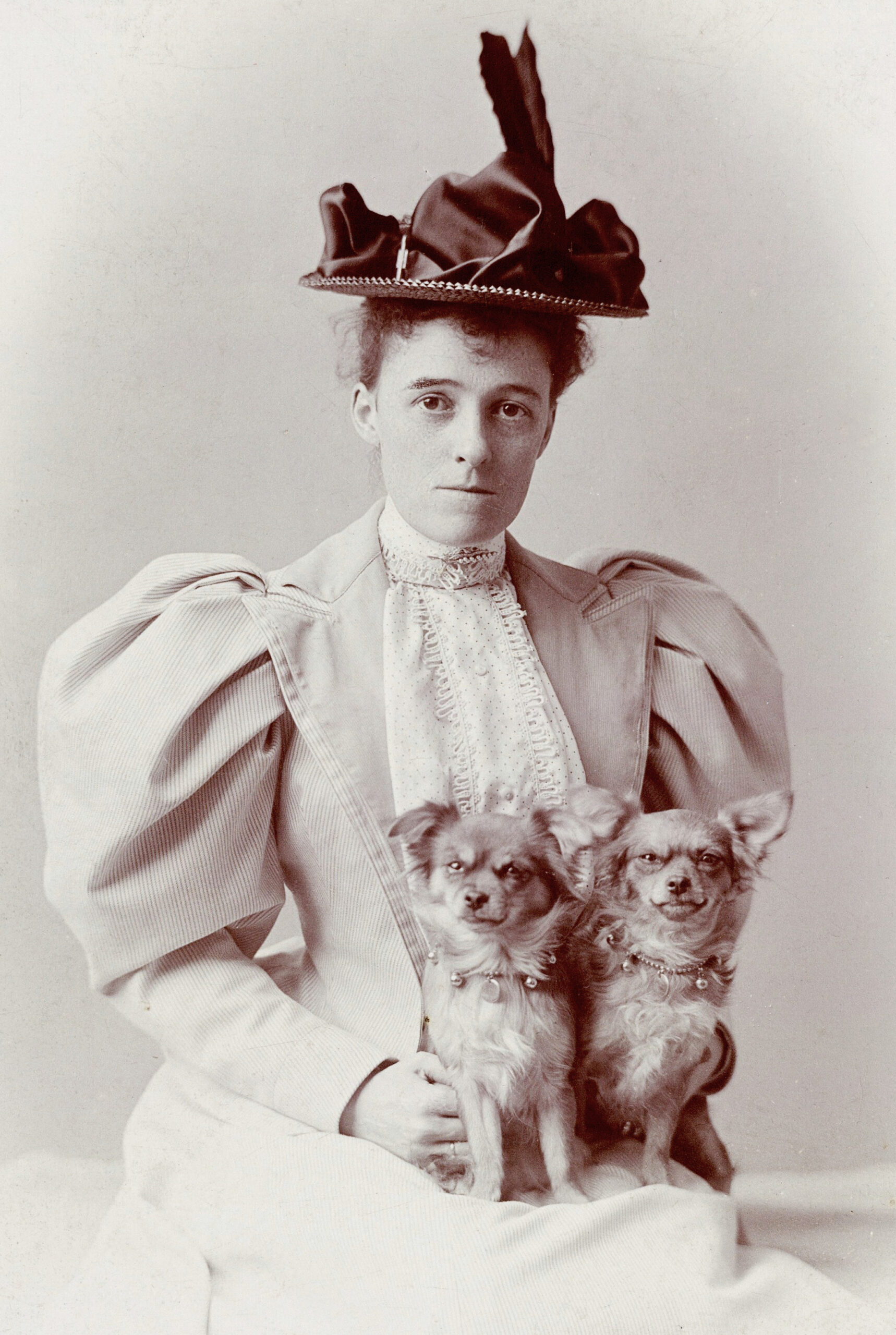
Edith Wharton

Edith WhartonEdith Wharton (1862-1937) was born into the heart of American aristocracy, the Jones family, when to be considered fashionable, one had to “keep up with the Joneses.” Because her mother forbade the reading of novels, the precocious Miss Jones began her literary career in poetry>. At fifteen, she was paid $50 for a translation of a German poem.

The house Edith Wharton built in Lenox, The Mount, remains central to cultural tourism in the Berkshires and is the site of literary and arts-centric activities throughout the year. More soon…

Poetry by Edith Wharton

Life

Life, like a marble block, is given to all,
A blank, inchoate mass of years and days,
Whence one with ardent chisel swift essays
Some shape of strength or symmetry to call;
One shatters it in bits to mend a wall;
One in a craftier hand the chisel lays,
And one, to wake the mirth in Lesbia’s gaze,
Carves it apace in toys fantastical.

But least is he who, with enchanted eyes
Filled with high visions of fair shapes to be,
Muses which god he shall immortalize
In the proud Parian’s perpetuity,
Till twilight warns him from the punctual skies
That the night cometh wherein none shall see.

Edith Wharton resources online

  • Poetry Foundation
  • Wikipedia
  • Project Gutenberg
  • Library of America

Leave a Comment

W.E.B. DuBois

W.E.B. Du BoisW.E.B. DuBois (1868-1963) was born in Great Barrington and in 1895 was the first black man awarded a Ph.D. by Harvard. His hometown neighbors contributed to his undergraduate study at Fisk University in Nashville; despite becoming a citizen of the world, DuBois remained fond of his hometown throughout his long life.

He was a pioneer in the new academic field of sociology, was a co-founder of the N.A.A.C.P. and engaged in Civil Rights work throughout America and Africa. Chief among his legacy is his essay collection, Souls of Black Folk, the title of which is hinted at in the opening stanza of his poem, The Song of the Smoke:

I am the smoke king,
I am black.
I am swinging in the sky,
I am ringing worlds on high;
I am the thought of the throbbing mills,
I am the soul of the Soul toil kills,
I am the ripple of trading rills.
Up I’m curling from the sod,
I am whirling home to God.
I am the smoke king,
I am black.

W.E.B. DuBois resources online

  • Poetry Foundation
  • Wikipedia
  • Library of America
  • Project Gutenberg

more soon…

Leave a Comment

  • « Go to Previous Page
  • Page 1
  • Page 2
  • Page 3
  • Go to Next Page »

Primary Sidebar

Berkshire Poets

  • William Cullen Bryant (1794-1878)
  • Nathaniel Hawthorne (1804-64)
  • Oliver Wendell Holmes (1809-94)
  • Fanny Kemble (1809-93)
  • Herman Melville (1819-91)
  • Edith Wharton (1862-1937)
  • W.E.B. DuBois (1868-1963)
  • William Jay Smith (1918-2015)
  • Amy Clampitt (1920-94)
  • Richard Wilbur (1921-2017)

Neighbors

  • Edward Taylor
  • Edna St. Vincent Millay
  • Archibald MacLeish

Copyright © 2026 · Dave Read; WordPress by ReadWebco - Profile at Poets & Writers.

  • Home
  • Mission
  • Contact