• Skip to primary navigation
  • Skip to main content
  • Skip to primary sidebar

Luminary Poets of the Berkshires

  • Home
  • Mission
  • Contact

Mount Graylock viewed from Monument Mountain

Luminary Poets of the Berkshires

  • Edward Taylor
  • William Cullen Bryant
  • Nathaniel Hawthorne
  • Oliver Wendell Holmes
  • Fanny Kemble
  • Herman Melville
  • Edith Wharton
  • W.E.B. DuBois
  • Archibald MacLeish
  • Edna St. Vincent Millay
  • William Jay Smith
  • Amy Clampitt
  • Richard Wilbur

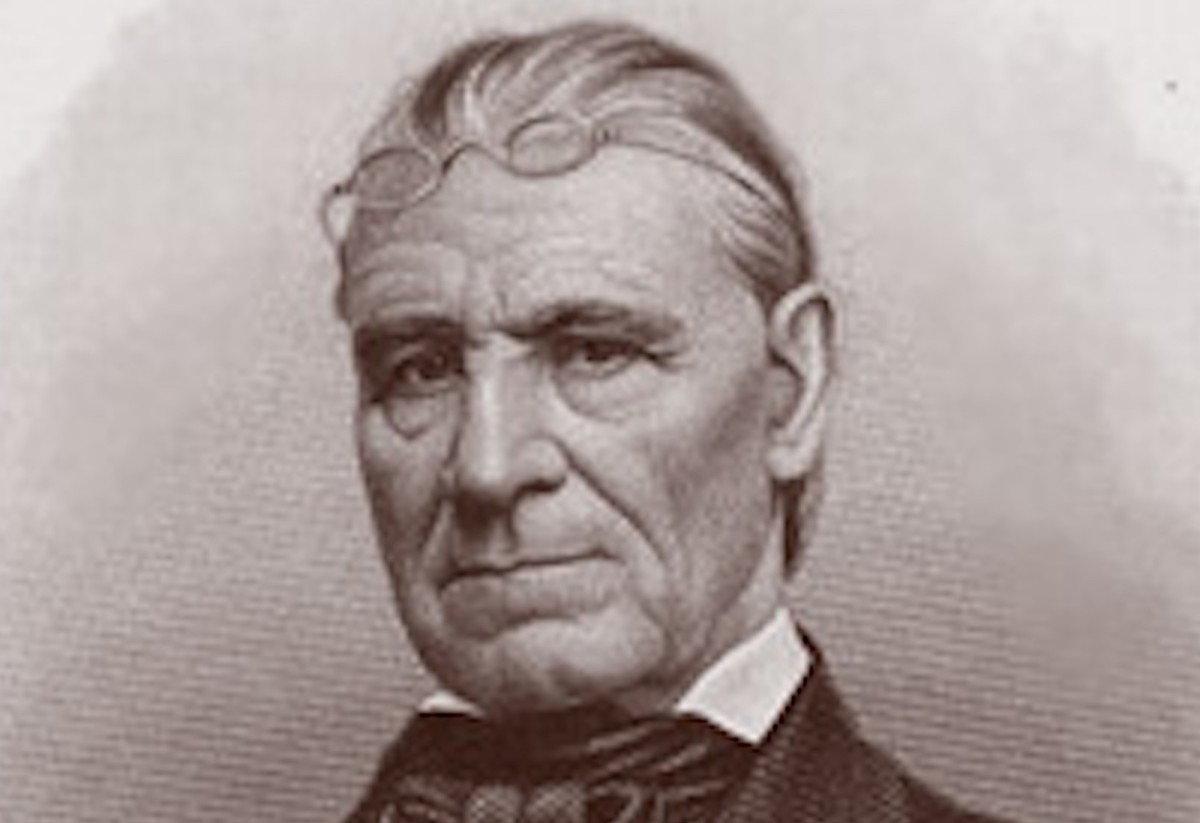
Edward Taylor

Edward Taylor, American poet, life sketch.
Edward Taylor (1642-1729), of Westfield, is the second notable American poet, after Anne Bradstreet (1612-72), and the first poet of the Berkshires. No poet could hope for a better role model, since an unfettered curiosity was the engine of his creativity, as the excerpt quoted below demonstrates.

Already well educated upon his arrival at Boston in 1668, he studied for the ministry at Harvard, graduating in two years, then accepting a call to go to the western frontier to become minister and physician in Westfield, on the eve of King Philips War. His leadership kept the people from fleeing in the aftermath of the Deerfield Massacre in 1704.

Besides succeeding in establishing a vibrant settlement in the wilderness during the remaining 58 years of his life, he left a body of written matter that would remain hidden for 200 years. One of his grandsons was Ezra Stiles (1727-95), 7th president of Yale College and a founder of Brown University.

Poetry by Edward Taylor

With its dual roots in 17th century diction and dogma, I expected Taylor’s poetry to be overrun with stale diction and errant dogma. My biases were overcome as soon as I read these lines, found in The Preface to his long serial poem, God’s Determination touching his Elect:

Who made the Sea’s its selvedge, and it locks
Like a Quilt Ball within a Silver Box?
Who Spread its Canopy? Or Curtains spun?
Who in this Bowling Alley bowled the Sun?

Those few lines display enough of a nimble imagination to make Edward Taylor worth reading, even long since the world, as he contemplated it, has sunk deep beneath the surface of today’s artificially-informed virtual reality.
Edward Taylor resources online

  • Poetry Foundation
  • Wikipedia
  • Library of America

Leave a Comment

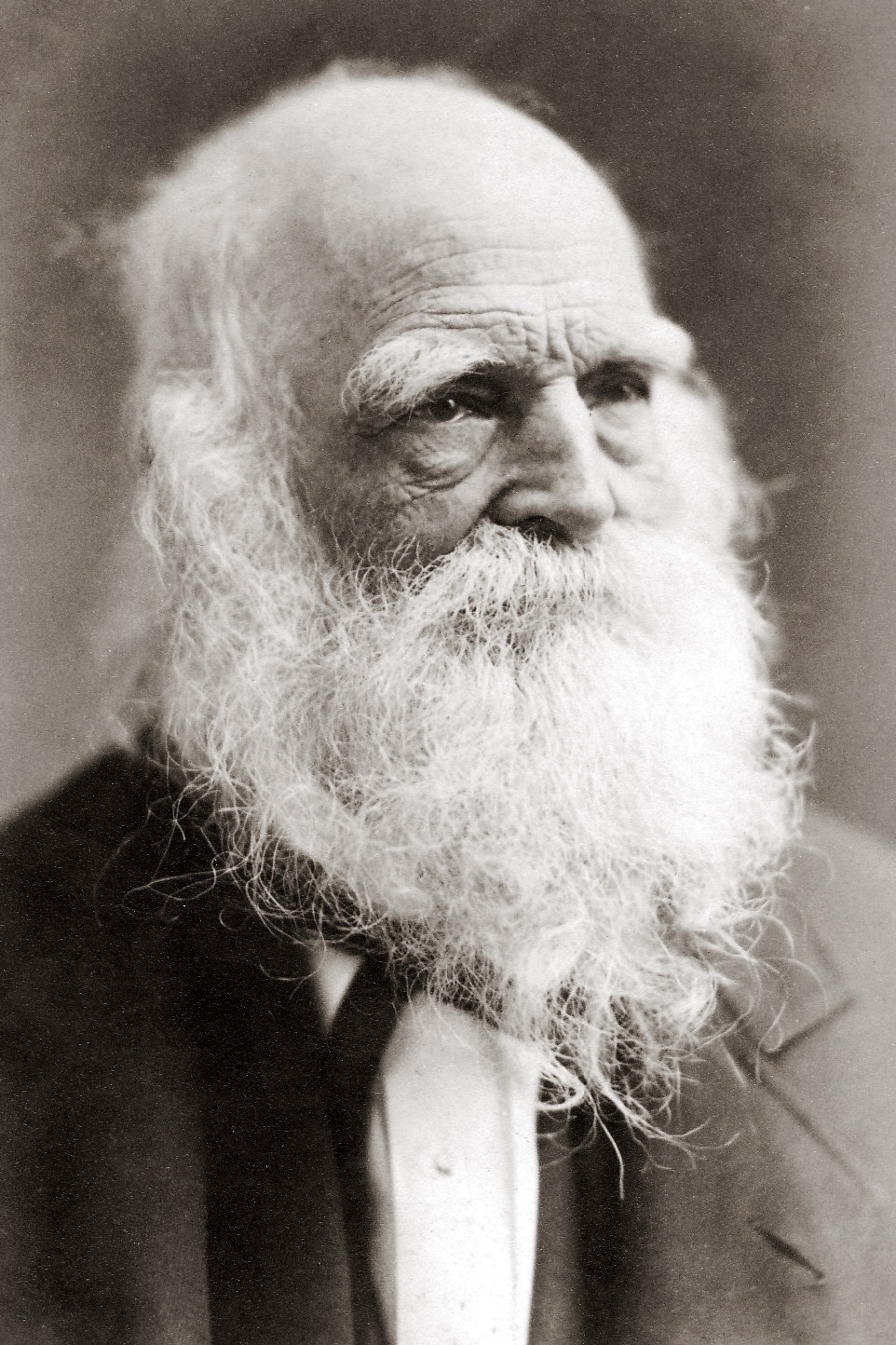
William Cullen Bryant

William Cullen Bryant, poet of the Berkshires.William Cullen Bryant (1794-1878) was born in Cummington; his father was a physician and his mother a Mayflower descendant. In addition to his importance as a poet, Bryant also played an important role in the development of American journalism, as editor, publisher, and part-owner of the newspaper founded by Alexander Hamilton that now is the New York Post.

Bryant wrote his most anthologized poem, Thanatopsis, in his teens; in 1808, he published The Embargo, a polemic critical of President Jefferson’s foreign policy. With Monument Mountain, Bryant spreads global renown over one of the Berkshires best loved places and familiar profiles. Less well-known is one that both honors the dispossessed Mohican nation and predicts the harm to the environment of that dispossession.

Poetry by William Cullen Bryant

Here are the concluding stanzas of the thirteen that comprise An Indian at the Burying Place of His Fathers:

Before these fields were shorn and tilled,
Full to the brim our rivers flowed;
The melody of waters filled
The fresh and boundless wood;
And torrents dashed and rivulets played,
And fountains spouted in the shade.

Those graceful sounds are heard no more,
The springs are silent in the sun,
The rivers, by the blackened shore,
With lessening current run;
The realm our tribes are crushed to get
May be a barren desert yet.

Complete poem, and many more available here.

William Cullen Bryant resources online

  • Poetry Foundation
  • Wikipedia
  • Library of America
  • Project Gutenberg

Leave a Comment

Nathaniel Hawthorne

Nathaniel Hawthorne, photo by Matthew Brady
Although primarily known for his novels and short stories, Nathaniel Hawthorne also published poetry. His local importance cannot be overstated, since he coined the word Tanglewood.

Hawthorne was an unwitting pioneer of the Berkshires’ cultural tourism industry, because the benefactors of his brief sojourn later gave the estate that included the Little Red House to the Boston Symphony Orchestra.

In 1900, The New York Times ran an article under this headline: HAWTHORNE’S STAY IN LENOX. Below is a replica of the cottage where he wrote Tanglewood Tales, and The House of Seven Gables.

His chance meeting and subsequent relationship with Herman Melville, during a rain-interrupted Monument Mountain hike in August 1850, led Melville to re-draft Moby-Dick, which he then dedicated to Hawthorne the following year. That Hawthorne remains dim in the too-bright shadow of Shakespeare is only because readers fail to heed one of the best (if 4 years late) book reviews ever written, Melville’s Hawthorne and His Mosses. See also: American Heritage 1975, Hawthorne, Melville on Monument Mountain.

Although the intervening centuries are like rigor mortis to the sound of the verse, this poem of Hawthorne’s, from 1820, will speak its truth forever.

Poetry by Nathaniel Hawthorne

Oh could I raise the darken’d veil

Oh could I raise the darken’d veil,
Which hides my future life from me,
Could unborn ages slowly sail,
Before my view—and could I see
My every action painted there,
To cast one look I would not dare.
There poverty and grief might stand,
And dark Despair’s corroding hand,
Would make me seek the lonely tomb
To slumber in its endless gloom.
Then let me never cast a look,
Within Fate’s fix’d mysterious book.

Nathaniel Hawthorne resources online

  • Poetry Foundation
  • Wikipedia
  • Library of America
  • Project Gutenberg

Leave a Comment

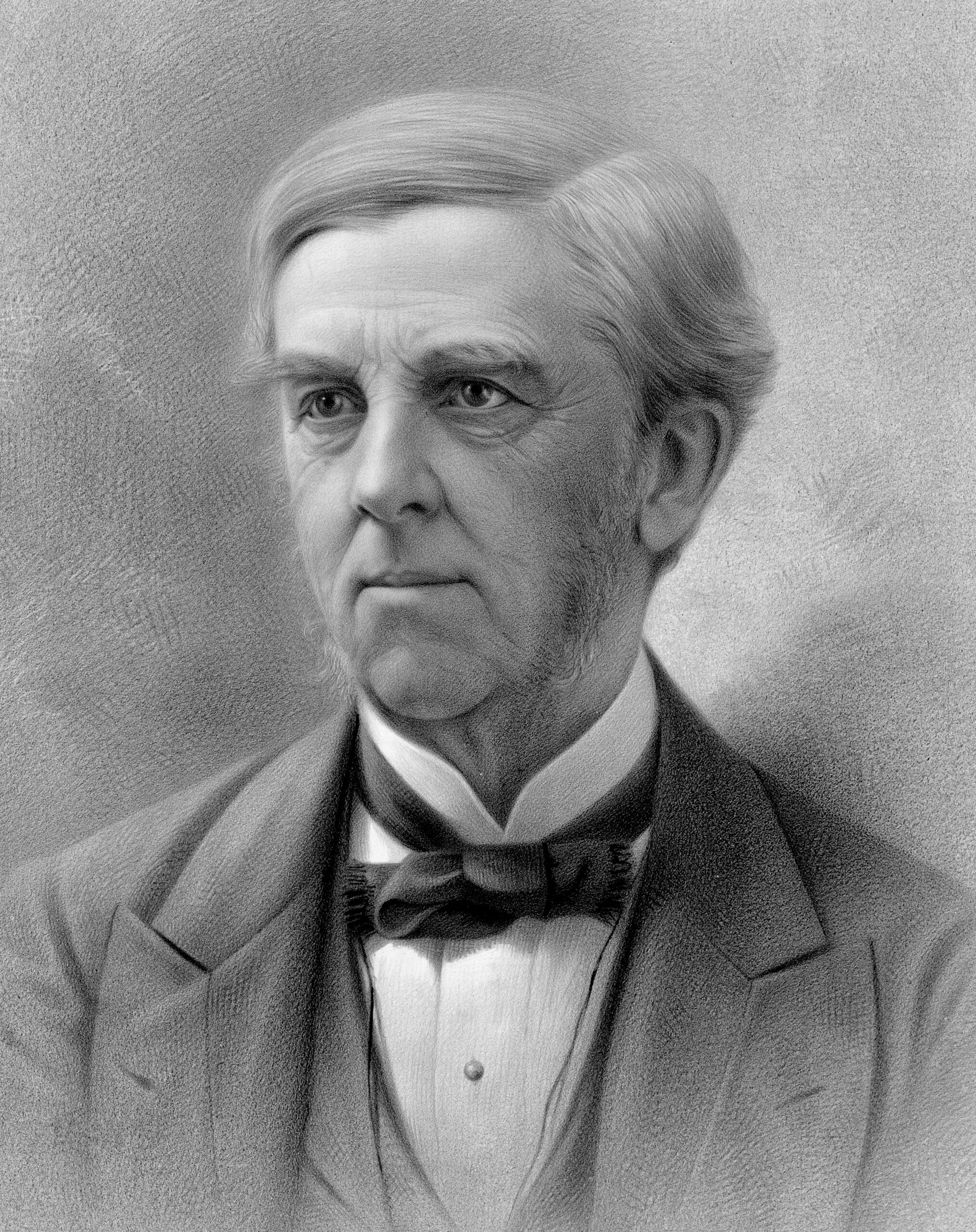
Oliver Wendell Holmes

Oliver Wendel Holmes, Sr.Oliver Wendell Holmes (1809-94) had as auspicious a birth as any American, next-door to Harvard Yard, in the house where the Battle of Bunker Hill was planned. His father was minister of the First Congregationalist Church and his mother was a descendant of colonial Governor Simon Bradstreet and wife, Anne, the first published American poet!

When his wife came into an inheritance in 1848, they built a summer home in Pittsfield on an estate that now is the Canoe Meadows Wildlife Sanctuary on Holmes Road. Across the street from the site of the house Holmes built is Arrowhead, Herman Melville’s former farmstead.

Holmes was in the party that hiked Monument Mountain, Aug. 5, 1850. More soon…

Poetry by Oliver Wendell Holmes

Here are the concluding 3 of the 11 stanza poem Daily Trials by a Sensitive Man:

Cockneys that kill
Thin horses of a Sunday,—men, with clams,
Hoarse as young bisons roaring for their dams
From hill to hill.

Soldiers, with guns,
Making a nuisance of the blessed air,
Child-crying bellman, children in despair,
Screeching for buns.

Storms, thunders, waves!
Howl, crash, and bellow till ye get your fill;
Ye sometimes rest; men never can be still
But in their graves.

Oliver Wendell Holmes resources online

  • Poetry Foundation
  • Wikipedia
  • Library of America
  • Project Gutenberg

Leave a Comment

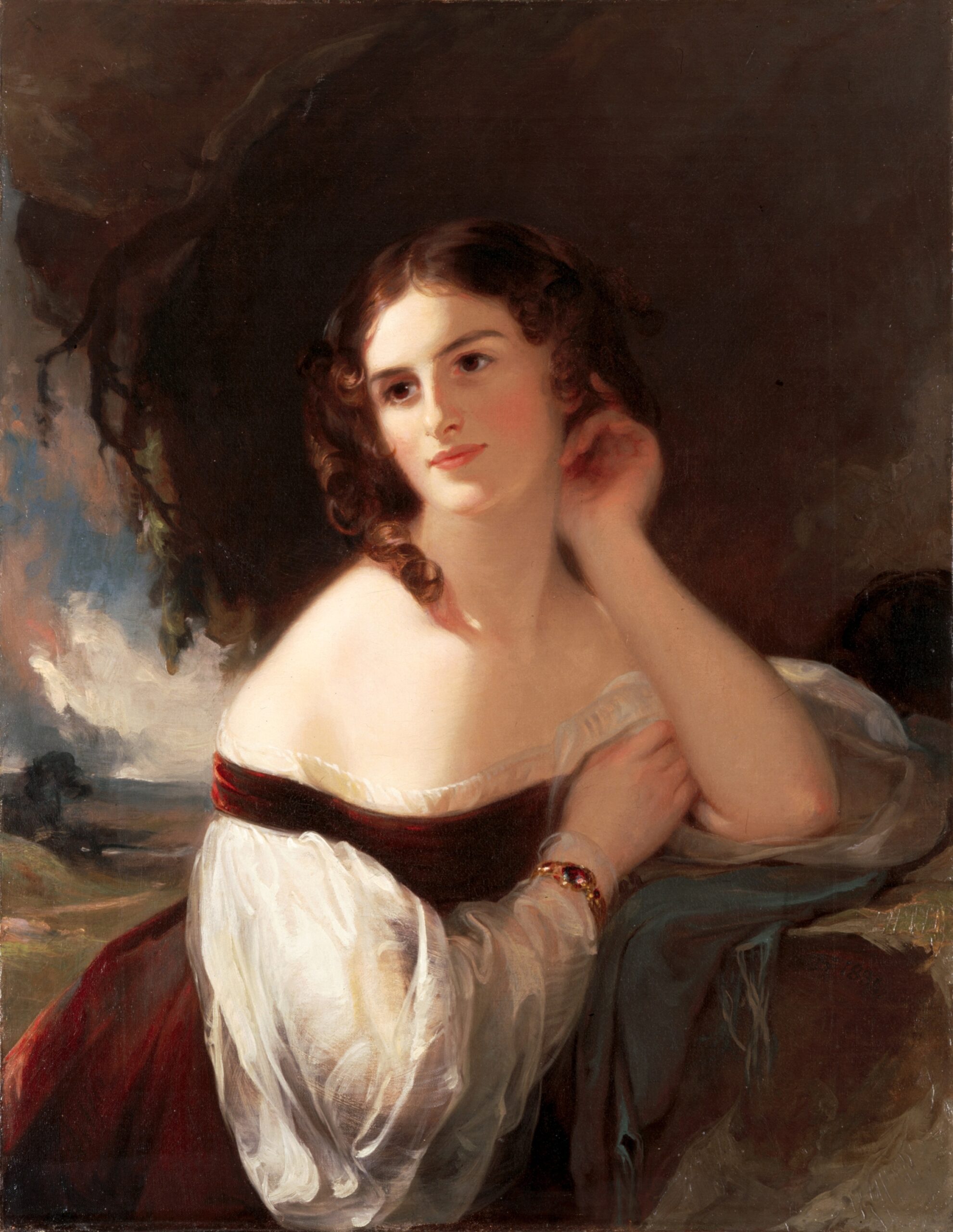
Fanny Kemble

Fanny KembleFanny Kemble (1809-93) was born into the leading theatrical family in London, educated in Paris, and wound up performing in America to raise money to rescue her father from bankruptcy. She was befriended in New York by Catharine Maria Sedgwick, who invited her to the Berkshires, which became the foundation of the cultural tourism industry in the Berkshires.

Her diary about her residence during 1838-39 on her husband’s plantation in Georgia, written in the form of letters to Mrs. Kate Sedgwick, although not published until 1863, is said to have turned the tide of English sentiment against officially supporting the Confederacy. Although great friends with both Melville and Hawthorne, Fanny Kemble was not in the party that hiked Monument Mountain, Aug. 5, 1850. More soon…

Poetry by Fanny Kemble

Faith

Better trust all, and be deceived,
And weep that trust, and that deceiving;
Than doubt one heart, that, if believed,
Had blessed one’s life with true believing.

Oh, in this mocking world, too fast
The doubting fiend o’ertakes our youth!
Better be cheated to the last,
Than lose the blessèd hope of truth.

Fanny Kemble resources online

  • Poetry Foundation
  • Wikipedia
  • Library of America – 19th Century vol. 1
  • Project Gutenberg

Leave a Comment

Herman Melville

Herman MelvilleHerman Melville (1819-91) was so moved by his chance encounter with Nathaniel Hawthorne, during the legendary Monument Mountain hike of 1850, that he re-wrote Moby-Dick in a matter of months. For a most thorough account of the legendary Monument Mountain hike, Aug. 5, 1850, please see this page at American Heritage.

Since that novel remains required reading among the world’s best-read people two centuries later, it’s no wonder the Berkshires remains celebrated for her cultural roots. Less well-known about Melville is his devotion to poetry, which is demonstrated by his 18,000 line poem Clarel, published in 1878, some twenty years after his pilgrimage to the Holy Land.

Herman Melville resources online

  • Poetry Foundation
  • Wikipedia
  • Library of America
  • Project Gutenberg

Poetry by Herman Melville

Art

In placid hours well-pleased we dream
Of many a brave unbodied scheme.
But form to lend, pulsed life create,
What unlike things must meet and mate:
A flame to melt—a wind to freeze;
Sad patience—joyous energies;
Humility—yet pride and scorn;
Instinct and study; love and hate;
Audacity—reverence. These must mate,
And fuse with Jacob’s mystic heart,
To wrestle with the angel—Art.

Leave a Comment

  • Page 1
  • Page 2
  • Page 3
  • Go to Next Page »

Primary Sidebar

Berkshire Poets

  • William Cullen Bryant (1794-1878)
  • Nathaniel Hawthorne (1804-64)
  • Oliver Wendell Holmes (1809-94)
  • Fanny Kemble (1809-93)
  • Herman Melville (1819-91)
  • Edith Wharton (1862-1937)
  • W.E.B. DuBois (1868-1963)
  • William Jay Smith (1918-2015)
  • Amy Clampitt (1920-94)
  • Richard Wilbur (1921-2017)

Neighbors

  • Edward Taylor
  • Edna St. Vincent Millay
  • Archibald MacLeish

Copyright © 2026 · Dave Read; WordPress by ReadWebco - Profile at Poets & Writers.

  • Home
  • Mission
  • Contact