• Skip to primary navigation
  • Skip to main content
  • Skip to primary sidebar

Luminary Poets of the Berkshires

  • Home
  • Mission
  • Contact

Mount Graylock viewed from Monument Mountain

Luminary Poets of the Berkshires

  • Edward Taylor
  • William Cullen Bryant
  • Nathaniel Hawthorne
  • Oliver Wendell Holmes
  • Fanny Kemble
  • Herman Melville
  • Edith Wharton
  • W.E.B. DuBois
  • Archibald MacLeish
  • Edna St. Vincent Millay
  • William Jay Smith
  • Amy Clampitt
  • Richard Wilbur

Edith Wharton

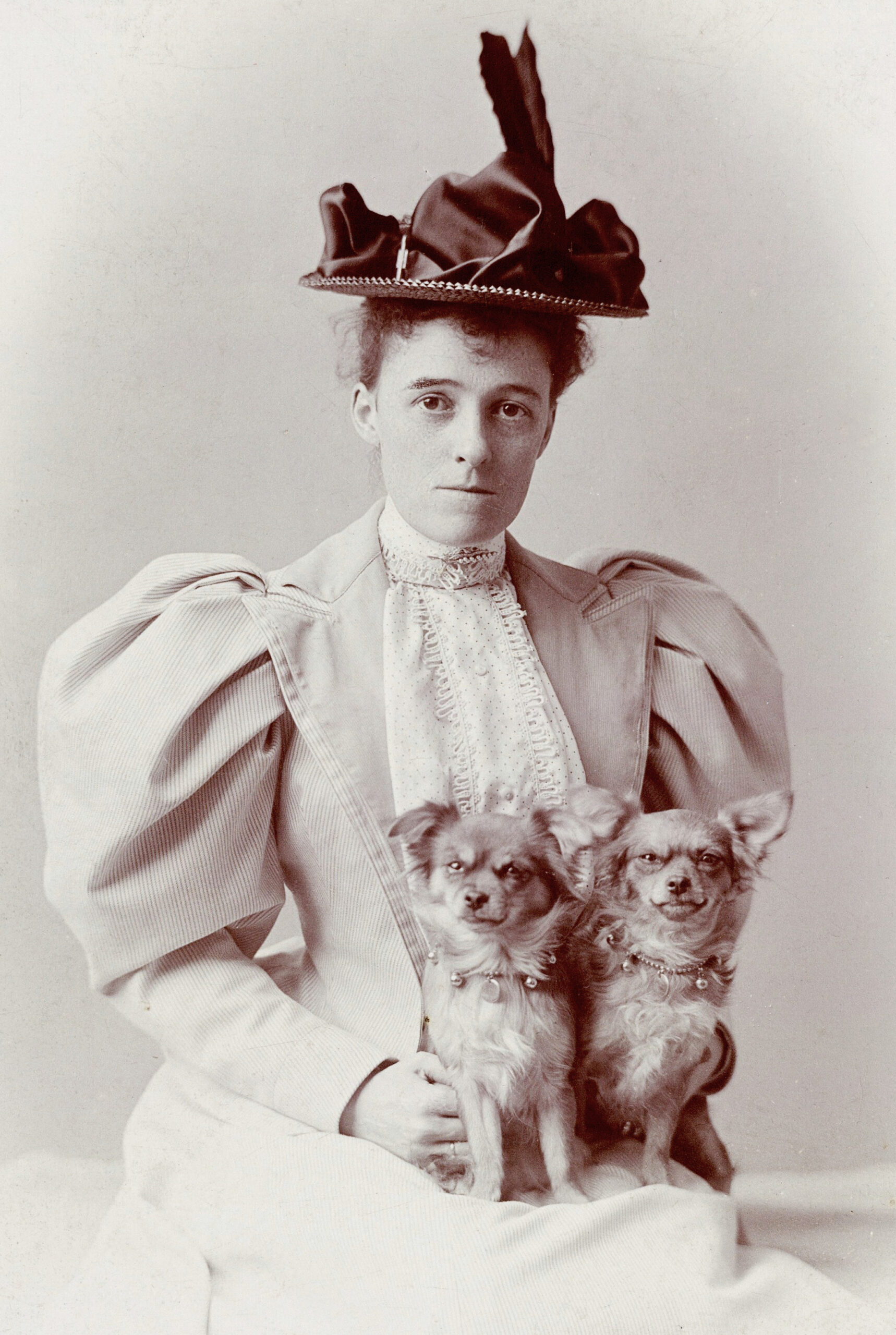
Edith WhartonEdith Wharton (1862-1937) was born into the heart of American aristocracy, the Jones family, when to be considered fashionable, one had to “keep up with the Joneses.” Because her mother forbade the reading of novels, the precocious Miss Jones began her literary career in poetry>. At fifteen, she was paid $50 for a translation of a German poem.

The house Edith Wharton built in Lenox, The Mount, remains central to cultural tourism in the Berkshires and is the site of literary and arts-centric activities throughout the year. More soon…

Poetry by Edith Wharton

Life

Life, like a marble block, is given to all,
A blank, inchoate mass of years and days,
Whence one with ardent chisel swift essays
Some shape of strength or symmetry to call;
One shatters it in bits to mend a wall;
One in a craftier hand the chisel lays,
And one, to wake the mirth in Lesbia’s gaze,
Carves it apace in toys fantastical.

But least is he who, with enchanted eyes
Filled with high visions of fair shapes to be,
Muses which god he shall immortalize
In the proud Parian’s perpetuity,
Till twilight warns him from the punctual skies
That the night cometh wherein none shall see.

Edith Wharton resources online

  • Poetry Foundation
  • Wikipedia
  • Project Gutenberg
  • Library of America

Leave a Comment

W.E.B. DuBois

W.E.B. Du BoisW.E.B. DuBois (1868-1963) was born in Great Barrington and in 1895 was the first black man awarded a Ph.D. by Harvard. His hometown neighbors contributed to his undergraduate study at Fisk University in Nashville; despite becoming a citizen of the world, DuBois remained fond of his hometown throughout his long life.

He was a pioneer in the new academic field of sociology, was a co-founder of the N.A.A.C.P. and engaged in Civil Rights work throughout America and Africa. Chief among his legacy is his essay collection, Souls of Black Folk, the title of which is hinted at in the opening stanza of his poem, The Song of the Smoke:

I am the smoke king,
I am black.
I am swinging in the sky,
I am ringing worlds on high;
I am the thought of the throbbing mills,
I am the soul of the Soul toil kills,
I am the ripple of trading rills.
Up I’m curling from the sod,
I am whirling home to God.
I am the smoke king,
I am black.

W.E.B. DuBois resources online

  • Poetry Foundation
  • Wikipedia
  • Library of America
  • Project Gutenberg

more soon…

Leave a Comment

Archibald MacLeish

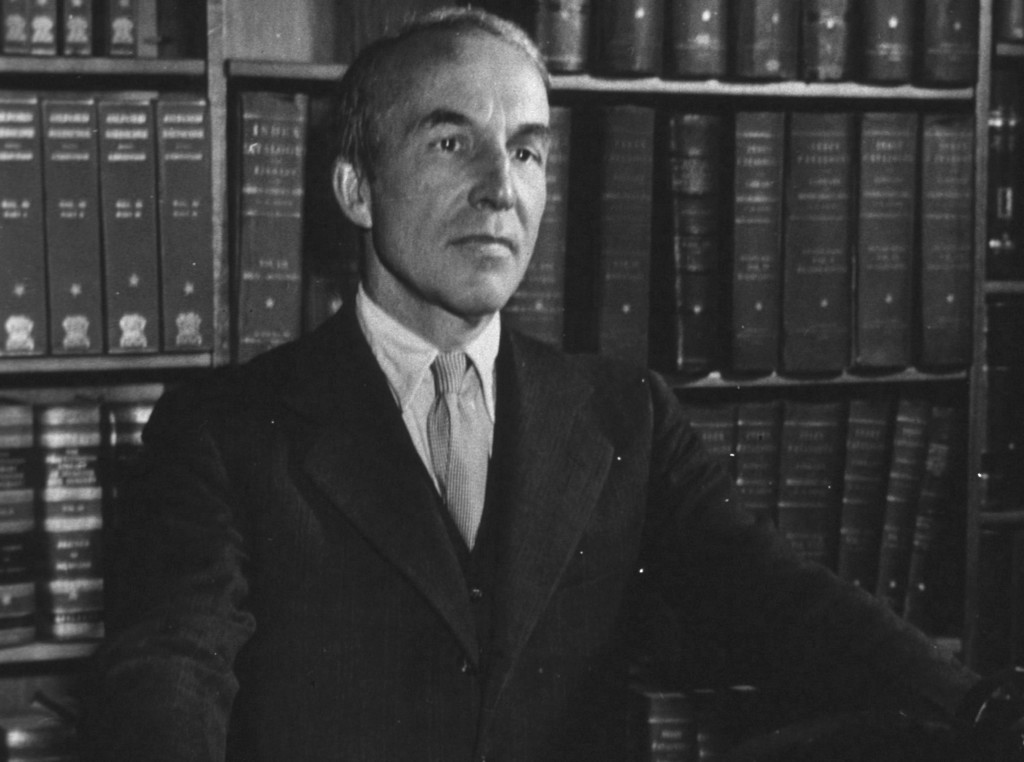
Archibald MacLeishArchibald MacLeish (1892-1982), long-time resident of neighboring Conway, MA, studied English at Yale and Law at Harvrd. After service in Europe during the first world war and some time in magazine journalism, he accepted the job as Librarian of Congress, at the suggestion of his Harvard classmate Felix Frankfurter. That places him at the beginning of the impressment of poetry into the executive department of the federal government, which would be a good thing so long as Americans only elected poetry lovers to the presidency.

Mr. MacLeish was present at JFK’s last major speech, at Amherst one month before Dallas. The President quoted this line from his poem Invocation to the Social Muse: There is nothing worse for our trade than to be in style.

Among the many accomplishments that distinguish him among the fellowship of American poets celebrated here, he is the only one to have collaborated with Bob Dylan, on a project that failed to come to fruition, however. (He wanted to transform his play JB into a musical)’ Here is the opening stanza of his famous poem Ars Poetica:

Poetry by Archibald MacLeish

A poem should be palpable and mute
As a globed fruit,

Dumb
As old medallions to the thumb,

Silent as the sleeve-worn stone
Of casement ledges where the moss has grown—

A poem should be wordless
As the flight of birds.

Archibald MacLeish resources online

  • Poetry Foundation
  • Wikipedia

Leave a Comment

Edna St. Vincent Millay

Edna St. Vincent MillayEdna St. Vincent Millay (1892-1950) spent the last decades of her life adjacent to the Berkshires at her Steepletop estate in Austerlitz, NY.

Ms. Millay was born in Maine and moved to Greenwhich Village after graduating from Vassar College in 1917. Her poetry, which first won prizes in her teens, led to becoming began recipient of the first two Pulitzer Prizes awarded to a woman, thus her stature in the literary world is unquestioned.

Poetry by Edna St. Vincent Millay

Ebb

I know what my heart is like
Since your love died:
It is like a hollow ledge
Holding a little pool
Left there by the tide,
A little tepid pool,
Drying inward from the edge.

Edna St. Vincent Millay resources online

  • Poetry Foundation
  • Wikipedia
  • Library of America
  • Project Gutenberg

Leave a Comment

William Jay Smith

William Jay SmithWilliam Jay Smith (1918-2015) was born in Louisiana, of Choctaw ancestry; he served as poet in residence at Williams College from 1959-68, serving a term in the Vermont legislature during that period.

Later, had a home in Cummington and was a Lenox resident when he died in 2015. From 1968-70, Smith was consultant in poetry to the Library of Congress, forerunner to today’s Poet Laureate.

Poetry by William Jay Smith

Here are the opening stanzas of his poem, Touch the Air Softly:

Now touch the air softly, step gently, one, two …
I’ll love you ’til roses are robin’s egg blue;
I’ll love you ’til gravel is eaten for bread,
And lemons are orange, and lavender’s red.

Now touch the air softly, swing gently the broom.
I’ll love you ’til windows are all of a room;
And the table is laid, And the table is bare,
And the ceiling reposes on bottomless air.

William Jay Smith resources online

  • Poetry Foundation
  • Wikipedia

Leave a Comment

Amy Clampitt

Amy ClampittAmy Clampitt (1920-94) didn’t devote herself to poetry until she was in her forties, when she began to be published in the New Yorker. Despite her late start and relatively brief career, reknown critic Harold bloom included her 1990 book Westward in his influential book, the Western Canon. At the time of her death from cancer, Ms. Clampitt was a Lenox resident. Her home has become the location of The Amy Clampitt Residency Program.

Poetry by Amy Clampitt

The following is the opening stanza of Amy Clampitt’s poem, The Godfather Returns to Color TV

The lit night glares like a day-glo strawberry,
the stakeout car beside the hydrant is full of feds,
and the ikon of our secret hero(ine?), atop the
feckless funnypaper mesa we try to live in, is that
poor dumb indestructible super-loser Krazy Kat.

Amy Clampitt resources online

  • Poetry Foundation
  • Wikipedia

Leave a Comment

  • « Go to Previous Page
  • Page 1
  • Page 2
  • Page 3
  • Go to Next Page »

Primary Sidebar

Berkshire Poets

  • William Cullen Bryant (1794-1878)
  • Nathaniel Hawthorne (1804-64)
  • Oliver Wendell Holmes (1809-94)
  • Fanny Kemble (1809-93)
  • Herman Melville (1819-91)
  • Edith Wharton (1862-1937)
  • W.E.B. DuBois (1868-1963)
  • William Jay Smith (1918-2015)
  • Amy Clampitt (1920-94)
  • Richard Wilbur (1921-2017)

Neighbors

  • Edward Taylor
  • Edna St. Vincent Millay
  • Archibald MacLeish

Copyright © 2026 · Dave Read; WordPress by ReadWebco - Profile at Poets & Writers.

  • Home
  • Mission
  • Contact